FEATURES / COLLABORATION
Agents that work as a team
Your agents can work with each other, sharing context to get bigger jobs done. Just like a real team.

Your agents can work with each other, sharing context to get bigger jobs done. Just like a real team.
Work doesn't stop at one person or one agent. Teammates and agents collaborate, hand off work, and build on each other's progress.
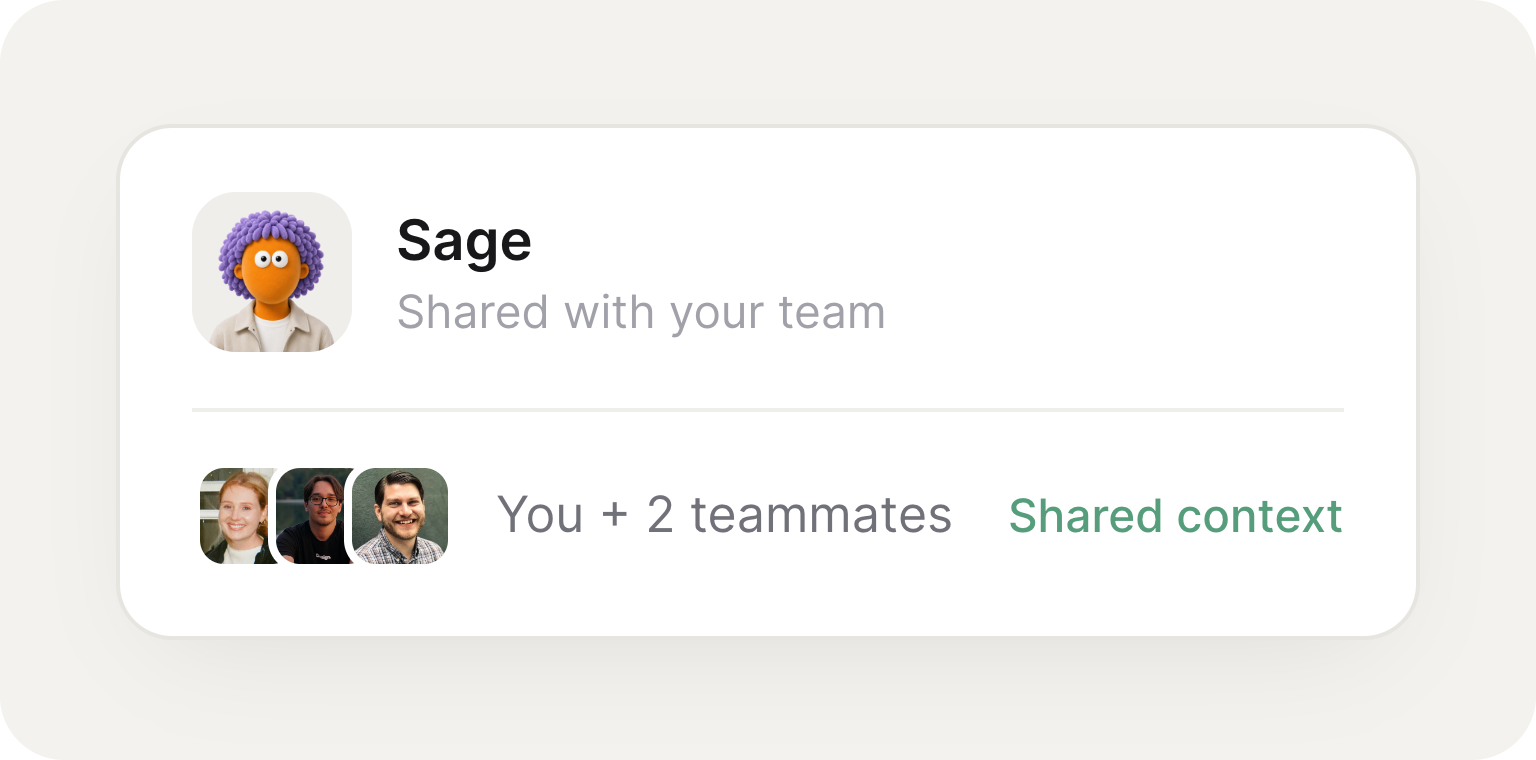
Anyone on your team can work alongside the same agents, with shared context and history.
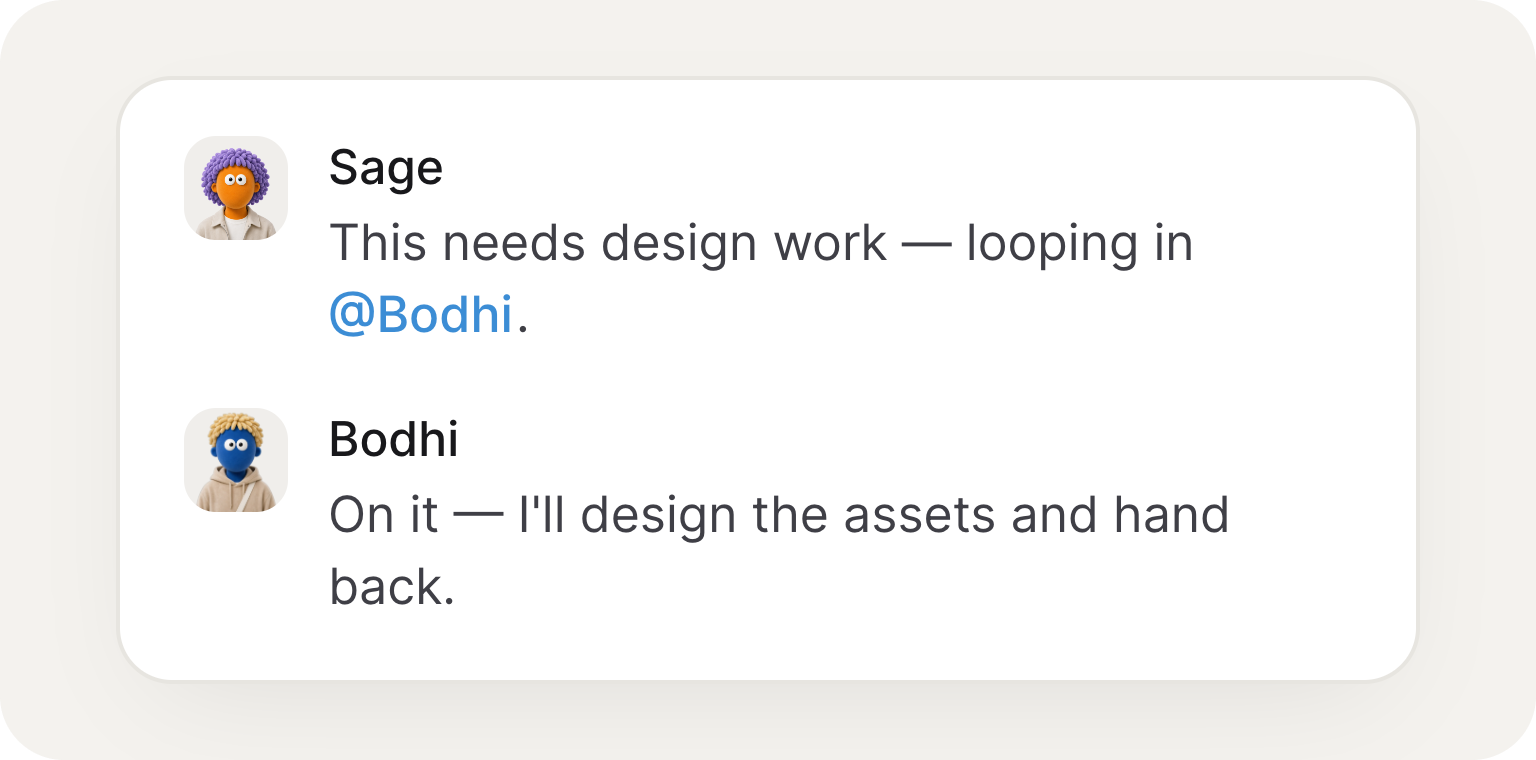
Agents hand work to one another automatically, bringing in specialists whenever they're needed.
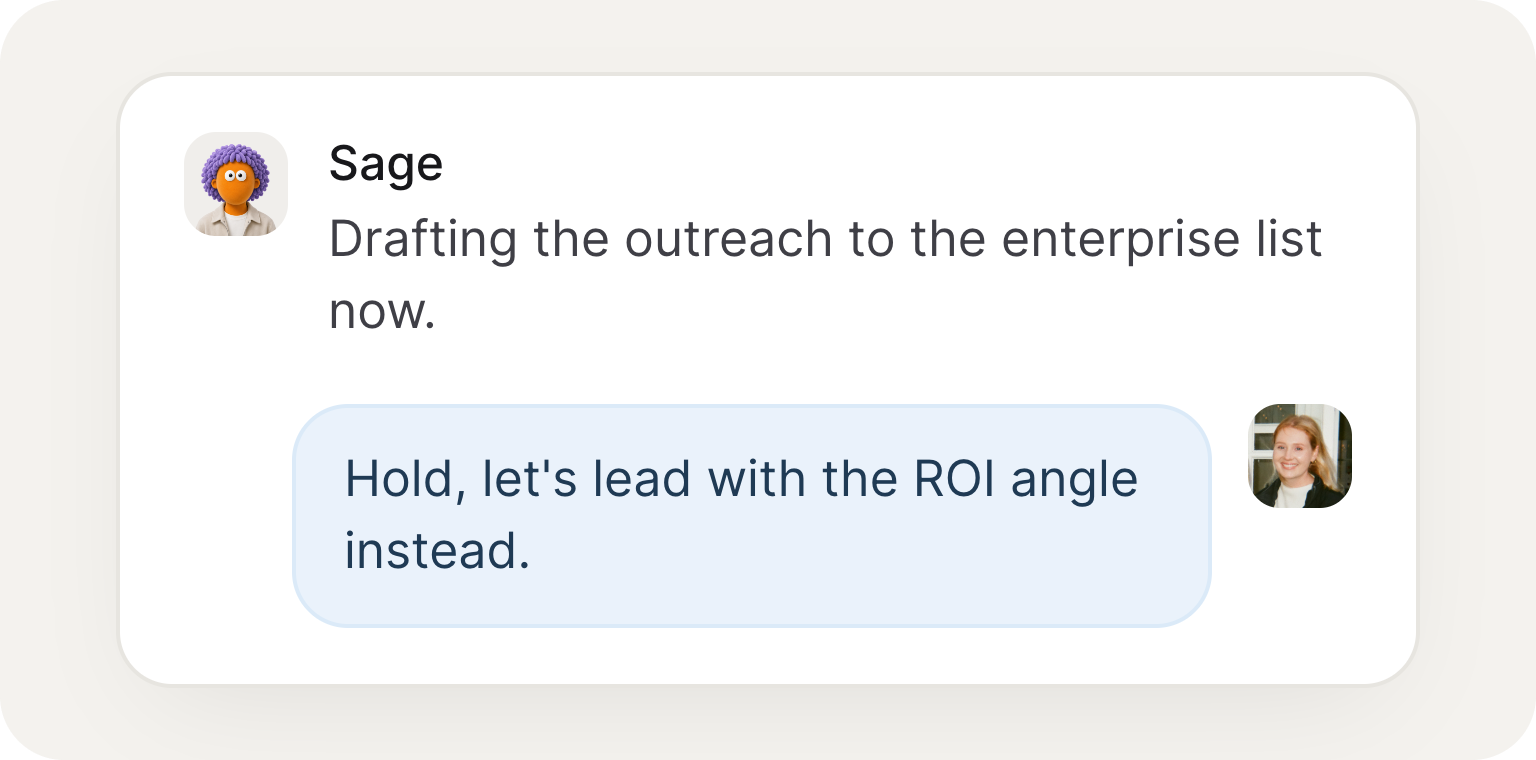
Jump in to review, redirect, or add context at any point. Agents and people work together, not separately.
Agents collaborate the way teammates do. They share context, pass work to specialists, and combine results into one finished outcome.




It means your agents work as a team, not one at a time. They share context, hand work to each other, and combine their results into one finished outcome. Just like a real team, the job does not stop at any single agent.
You can if you would like. Agents can pass work to one another automatically, bringing in a specialist whenever one is needed. You describe the outcome you want, and they coordinate to get there. There is no flowchart to draw and no workflow to wire.
When one agent hands off to another, the context goes with it. The next agent picks up where the last one left off, so nothing gets re-explained and no work gets repeated. Progress builds instead of resetting.
Yes. Anyone on your team can work alongside the same agents, with shared context and history. An agent set up by one person becomes part of how the whole team works, so the knowledge does not live with just one of you.
Always. You can jump in to review, redirect, or add context at any point, and set which actions need your approval first. Agents and people work together, not separately, so you stay in control of anything that matters.
The kind too big for one. Agents split a job across specialists, work in parallel, and bring the pieces back together, so work that spans tools and roles actually gets finished. One request can put many agents to work at once.