SOLUTIONS / PRODUCTION SUPPORT ENGINEER

Root cause, not guesswork.

Hand your agent a symptom, a thread, an error string, and it goes one layer below the log to find the real failure. It correlates logs, the warehouse, the prod database, and the code, then ships a fix with a regression test.

Skydive marketing agents at work in Slack

Bug investigation, owned end to end.

From an ambiguous symptom to a verified root cause with a tested fix, your agent does the whole investigation.

#incidents
Rain
Where's the actual failure?
SkydiveAPP
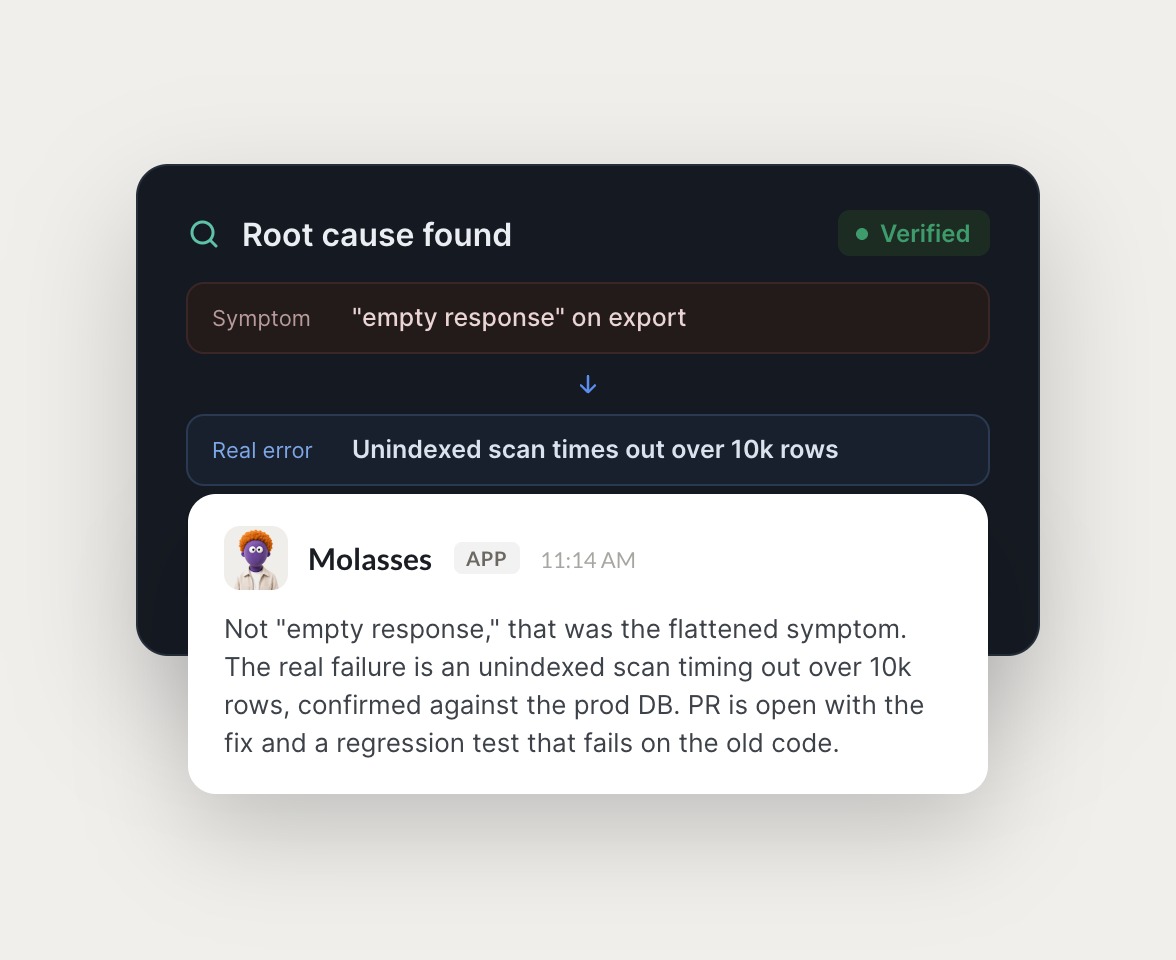
Found it, one layer down. A query in export_service.py:214 does an unindexed scan; on large accounts it exceeds the 30s gateway timeout. Confirmed against the prod DB: every failing account has over 10k rows. Evidence and the run transcript are in the thread.
Rain
That's the one. Ship a fix.
#eng
Rain
Give me the fix.
SkydiveAPP
Done. Opened a PR: adds the missing index and paginates the export. It ships with a regression test that fails on the old code (times out at 10k rows) and passes on the new. Root cause, file:line, and the proving log line are all in the PR description.
Rain
Merging. This is exactly what I needed.
INTEGRATIONS

Works inside your everyday tools.

Each agent has its own computer with a browser and reads across the seams: CloudWatch and proxy logs, ClickHouse run transcripts, the read-only prod DB, GitHub on the right branch, Sentry, and Linear. The value is cross-seam correlation, not a single connector.

and more

Built from your words, not a workflow.

Tell an agent what you need, let it take care of the rest. Build out your entire team the same way.

#growth
Gen
Set up weekly performance reports across Meta and Google.
WasabiAPP
Done. I'll pull the numbers every Monday.
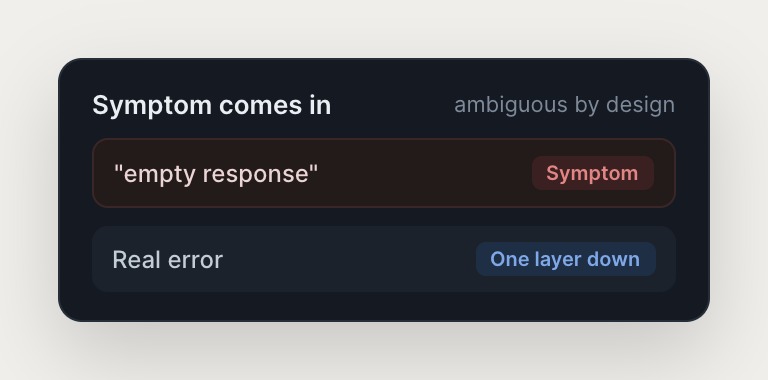
It doesn't stop at the symptom.

"Something went wrong," "empty response," "sandbox unavailable" are symptoms, not causes. Your agent investigates beyond the upstream error, then diagnoses and reports the real failure.

All online
Flick
Raven
Dahl
# growth
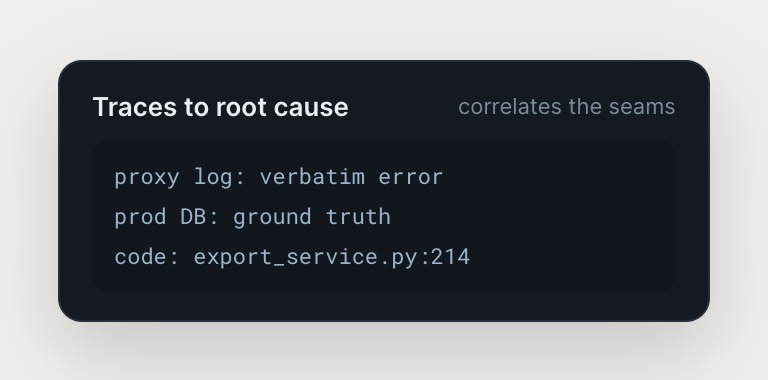
It correlates in full spec.

A bug is rarely in one place. Your agent rebuilds the run from logs, replays the transcript from the warehouse, checks ground truth in the prod database, and reads the code on the right branch.

Edamame
Working
Drafted 3 ad variations
Launching now...
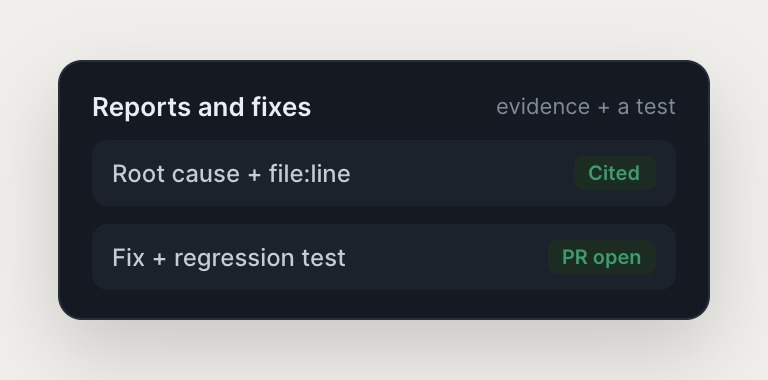
Every fix ships with a test.

Your agent delivers the root cause, cited evidence with file and line, and a fix with a regression test.

We run on Skydive too.

We don't just build Skydive, we run our company on it. Our team puts agents to work every day (they even helped build this page).

"Skydive truly transforms your entire company by automating all of the tedious tasks that consume so much of your day"

Marcus Lowe, Co-Founder
Skydive
FAQ

Common questions about production support with Skydive

What does this agent actually do?

It investigates production bugs to their real root cause. Hand it a symptom, a thread, an error string, a PR number, and it goes one layer below what the worker logged to find the actual failure. The output is the root cause, cited evidence, and a fix that ships with a regression test.

How is this different from an alerting or on-call tool?

Alerting tools route symptoms to a human. This agent does the investigation, not just the paging.

How does it avoid guessing?

Agents reason from what actually happened, not what the code should do. Plausible cause is treated as failure.

What tools does it work across?

Whatever the investigation needs, correlated across the seams: logs for the upstream error, the data warehouse for the run transcript, the read-only prod database for ground truth, GitHub on the right branch, and Sentry and Linear for errors and issues.

Does it just report, or can it fix the bug?

It can open the PR. The default ending is a fix, not an escalation. Every fix ships with a regression test that fails on the old code and passes on the new. Escalation to a human is the fallback when it's genuinely blocked.

Can it work on a schedule or triage a backlog?

Yes. It can watch for new production errors, triage an incident backlog, and investigate on a schedule, delivering each root cause with evidence and a proposed fix. You review the PRs instead of doing the log-diving.