SOLUTIONS / AI CHIEF OF STAFF

AI chief of staff: your judgment, multiplied

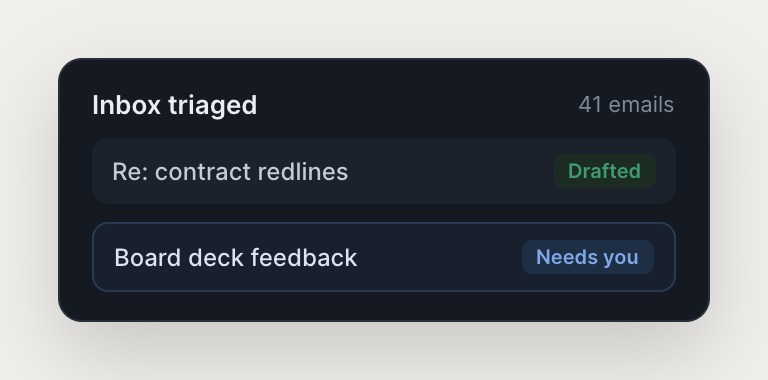
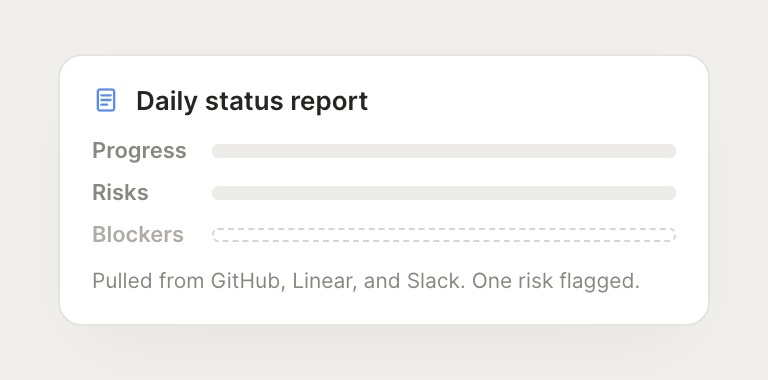
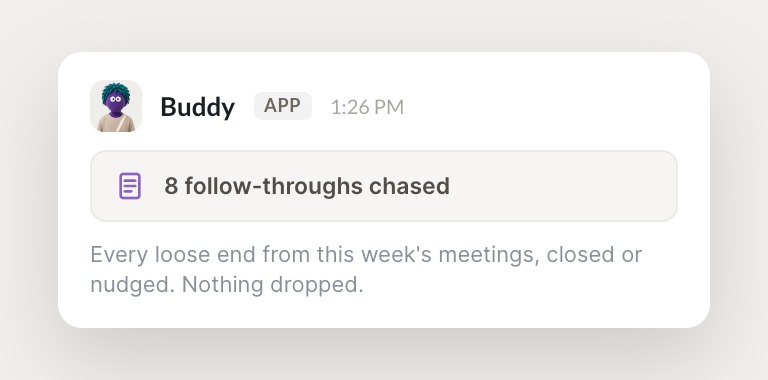
Skydive agents handle the follow-throughs that live in the seams, right inside the tools you already run on. They carry context across meetings, chase down the dozens of loose ends between them, and hand off to each other so nothing falls through the cracks.
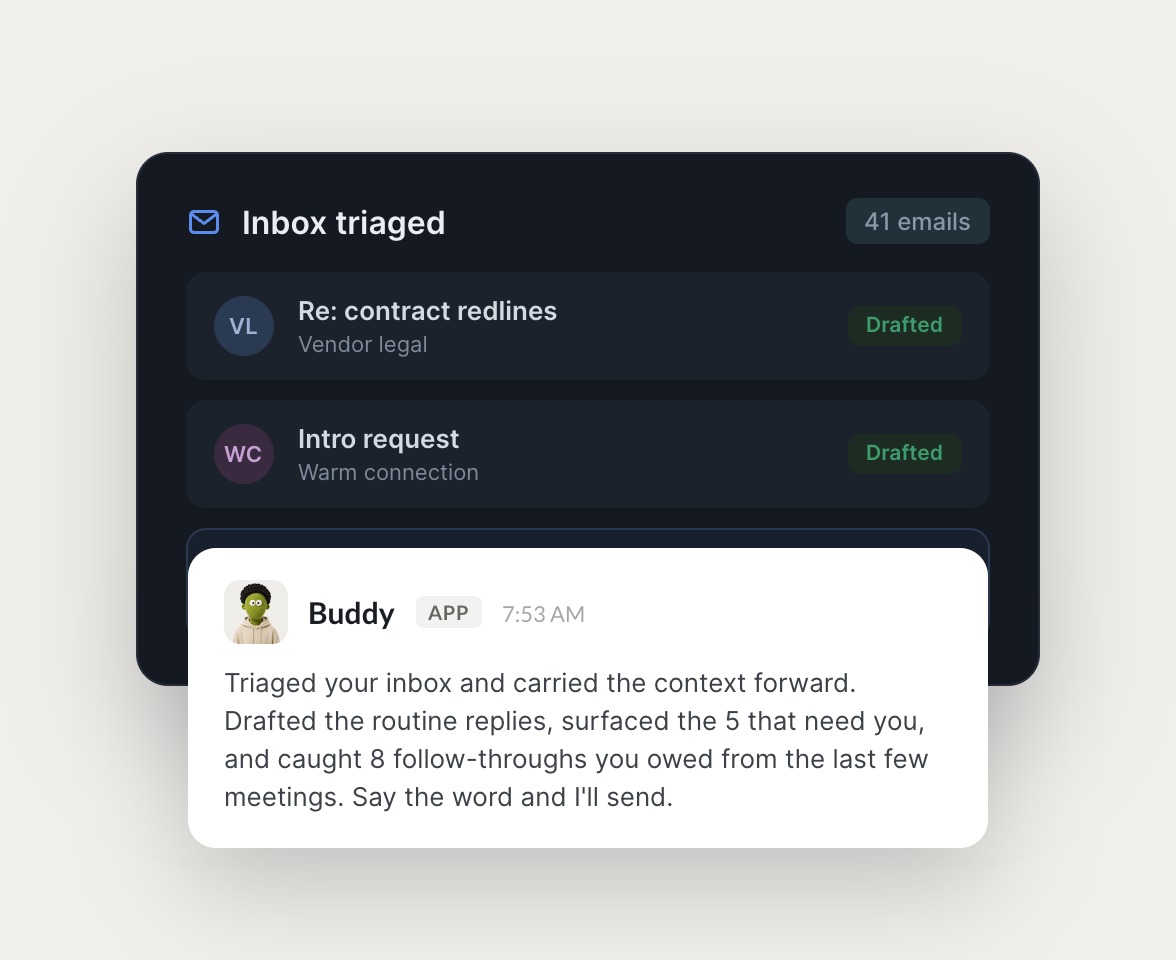

Skydive agents at work in Slack

Real work, handled by your AI chief of staff team

Concrete scenarios where a team of named agents acts as your chief of staff, across inbox, launches, support, and pipeline.

#
outreach
Dhruv
Find 100 Series B founders and draft a personal cold email to each.
Butterscotch
APP
On it. One agent pulled 100 prospects, another enriched each from the web and cleaned the CRM, and a third is drafting personal emails in your voice now.
Dhruv
Stage them as drafts in my Gmail so I can review before they send.
#
support
Dhruv
Customer says their export is stuck. Figure out what's going on.
Turtle
APP
The agent dug through the logs, code, and database. Exports time out on accounts over 10k rows, it's a slow query on our side. Drafted a clear reply with the fix and timeline, and escalated the bug with logs attached.
Dhruv
Perfect, send the reply and link me the bug.
INTEGRATIONS

Works inside your everyday tools.

Each agent has its own computer with a browser, so it logs into your existing tools the way a human operator would, navigating across systems no one has wired an integration for.

and more

Built from a description, not a workflow.

You don't get one assistant in a tab. You get a team of agents that persist, hand off, and keep the judgment you build into them.

Built from a description, not a workflow

Workflow builders make you the engineer. You decide the how and construct every step. Skydive builds the agent from your description of the outcome. No canvas to construct, no logic to wire, no prompt engineering. Pre-built templates are productive on day one.

A team of agents, not a single chatbot

Most AI tools give you one assistant in a chat that closes when the tab closes. Skydive ships a team. Work persists, hands off between agents, and keeps running while you sleep.

Built for 15 to 50 person funded startups

Enterprise platforms need formal IT review, procurement cycles, and enterprise pricing. Skydive is self-serve, prosumer-priced, and accessible to the operator who needs output today. No IT review, no procurement backlog, get started in minutes.

We run on Skydive too.

We don't just build Skydive, we run our company on it. Our team puts agents to work every day (they even helped build this page).

"Skydive truly transforms your entire company by automating all of the tedious tasks that consume so much of your day"

Marcus Lowe, Co-Founder
FAQ

Frequently asked questions

How is Skydive different from workflow builders like Zapier or Make?

Workflow builders make you the engineer. You decide the how and construct every step. Skydive builds the agent from your description of the outcome. No canvas to construct, no logic to wire, no prompt engineering. Pre-built templates are productive on day one.

How is Skydive different from single-agent tools like ChatGPT or Claude?

Single-agent tools give you one assistant in a chat that closes when the tab closes. Skydive ships a team. Work persists, hands off between agents, and keeps running while you sleep. Agents have their own identities, scopes, and histories, and they collaborate automatically.

How long does it take to get started?

Sign up, describe the outcome you need, connect the tools, and start delegating. Most operators have their first agent running in under 10 minutes. Pre-built templates are ready to use.

Do I need engineering resources to set up Skydive?

No. Skydive is built for operators, not engineers. Each agent has its own computer with a browser, so it logs into your existing tools the way a human operator would, and no API integrations are required.

Can I share agents across my team?

Yes. Anyone on the team can create agents. Permissions control view, use, or edit on a per-agent basis. Useful agents spread the way useful things inside companies always spread.

What happens if an agent makes a mistake?

Agents remember context and learn from corrections. The judgment you build into an agent persists, so it gets better over time. You can review agent output before it goes live, or let the agent handle routine work automatically.