How is Skydive different from ChatGPT or Claude?
ChatGPT and Claude are single-agent chat tools. Work resets when the session ends. Skydive ships a team of agents that hand off to each other, remember context across conversations, and persist judgment over time. Agents live in Slack, email, and iMessage, not a separate chat window you have to remember to open. The work compounds instead of resetting.
Do I need to be technical to use Skydive?
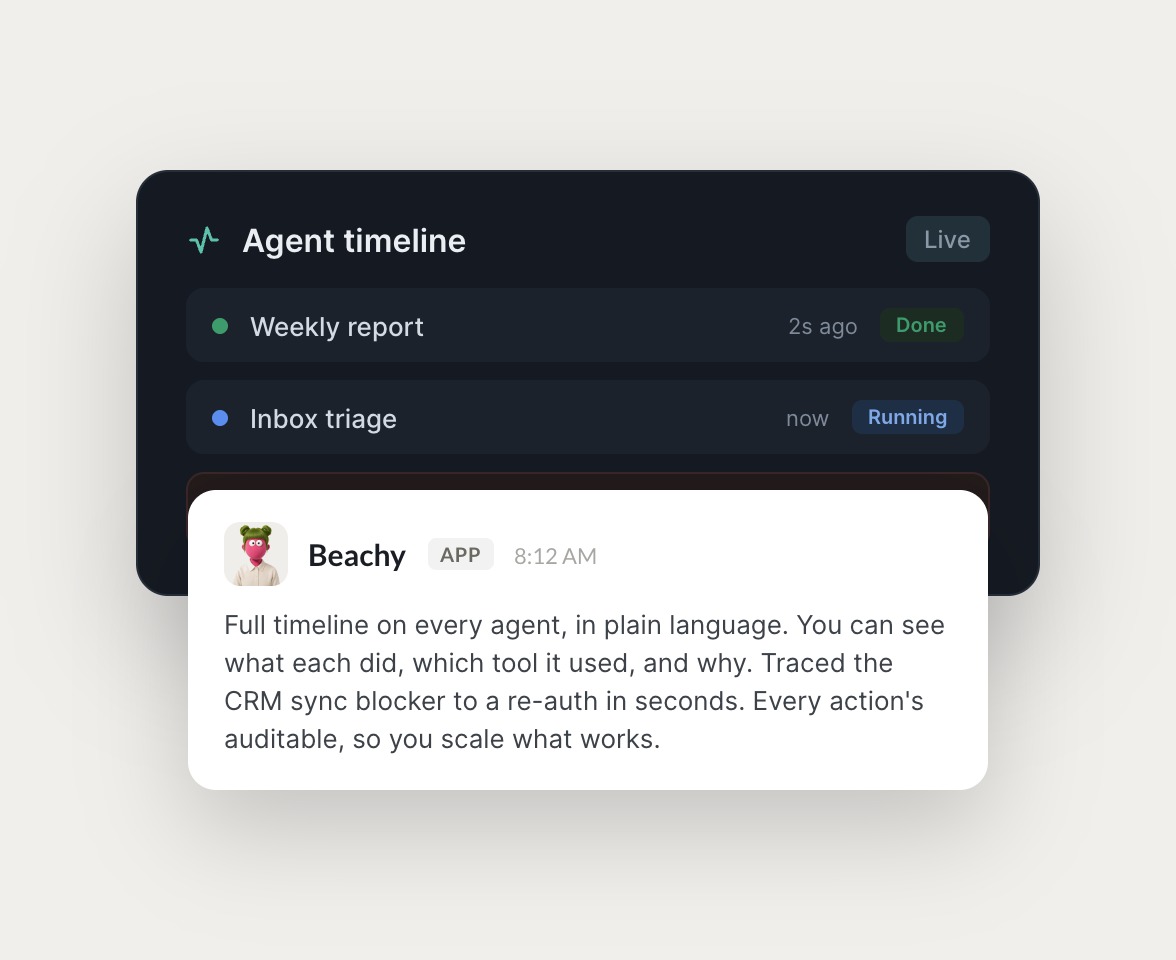
No. You describe the outcome you need, and Skydive builds the agent around it. No workflow logic to wire, no prompt engineering, no canvas to construct. Your team reviews agent activity in plain language. The timeline shows what the agent did, which tool it used, and why it made that choice.
How long does onboarding take?
Most teams are productive on day one. You describe the agent, connect the tools it needs, and start delegating work. Templates for common use cases like inbox triage, CRM hygiene, and support drafting speed up the process. The first week, you review everything. By week four, the agent handles the routine work on its own.
Is Skydive secure? What about data privacy?
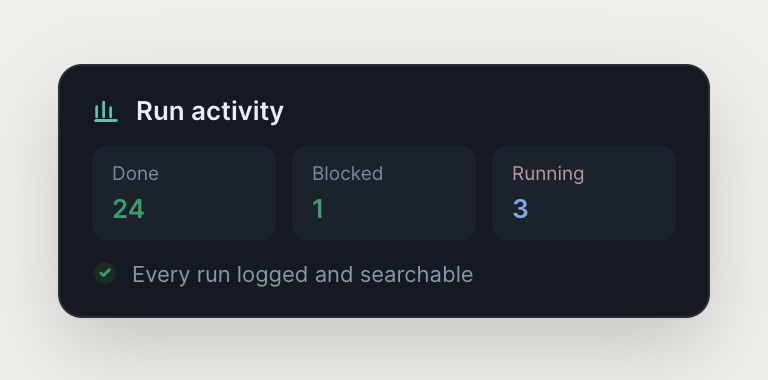
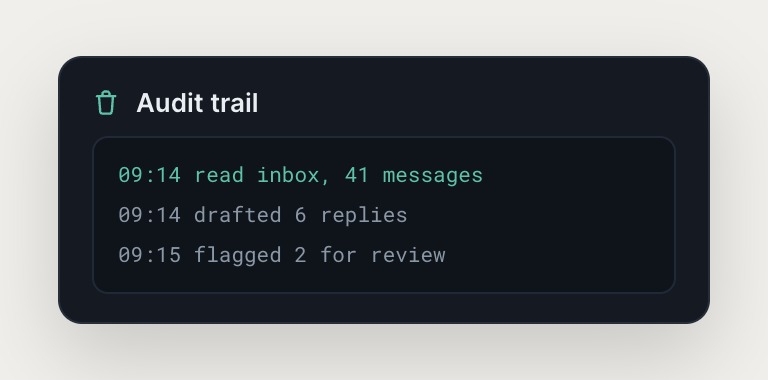
Agents log into your tools the way a human operator would. Skydive does not store your data. Every action is logged and auditable by your team. Granular permissions let you control who can view, use, or edit each agent. You decide what data agents can access and what actions they can take.
Is this overkill for a team of 15 to 50 people?
Skydive is built for 15 to 50 person funded startups. The ICP is the Head of Ops, Chief of Staff, or GTM lead whose job is everything that doesn't fit anywhere else. Hiring is slow and politically expensive at this stage. Agents give your team leverage without waiting months to hire or justify headcount.
What tools does Skydive integrate with?
Agents work inside Slack, Gmail, Stripe, GitHub, Linear, Notion, Google Sheets, Intercom, Ahrefs, and dozens more. Each agent has its own browser and can navigate tools the way a human operator would. No API integrations to build. Agents click, type, and pull data across systems no one has wired together.